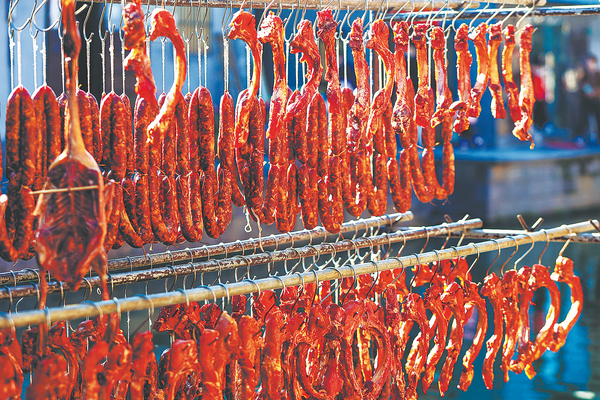
Chinese Sausage
Introduction
Chinese sausage, known as "Lap Cheong" in Cantonese, is a type of cured sausage originating from China. It is characterized by its sweet and savory flavor, rich aroma, and firm texture. Unlike Western sausages, Chinese sausages are usually made from a mixture of ground pork, fat, sugar, and a variety of seasonings, including soy sauce and rice wine. These sausages are often air-dried or smoked to develop their distinct flavor and can vary greatly in taste, texture, and ingredients depending on the region of origin. They are a staple in Chinese cuisine, frequently used to add depth of flavor to rice and noodle dishes, and are enjoyed both domestically and internationally.
History
The tradition of sausage-making in China dates back thousands of years, with evidence suggesting that sausages were consumed as early as the Northern and Southern Dynasties (420-581). During this time, the preservation of meat through curing and drying was essential for sustaining food supplies, especially in colder months. The art of making sausages evolved over time, with different regions adapting their recipes to include local ingredients and flavors. Cantonese sausages, known for their sweet taste, are among the most famous and widely consumed varieties. The preparation of sausages became a significant part of Chinese culinary culture, particularly during the last month of "la yue" on the traditional Chinese calendar, when families would prepare cured meats for the upcoming Chinese New Year celebrations.
Varieties
Chinese sausages vary widely in taste, texture, and preparation methods across different regions of China.
Lap Cheong
Lap Cheong is perhaps the most recognized type of Chinese sausage. It is known for its sweet flavor, which is derived from the use of sugar and soy sauce in its preparation. These sausages are typically air-dried and have a reddish hue. They are popular in Southern China and are often used to enhance the flavor of dishes like fried rice and clay pot rice.
Xiang Chang
Xiang Chang originates from the Sichuan and Hunan provinces and is noted for its spicy and savory profile. Unlike the sweet Lap Cheong, Xiang Chang includes ingredients like chili peppers, Sichuan peppercorns, and garlic, delivering a bold and pungent taste. These sausages are favored in regions known for their spicy cuisine and are often used in stir-fries or served as a spicy accompaniment to rice.
Cantonese Sausage
Cantonese Sausage is a broader category that includes various styles of sausages produced in the Guangdong province. These sausages are generally sweeter and are often infused with rice wine or other spirits for added depth of flavor. They are a key ingredient in many traditional Cantonese dishes and are appreciated for their ability to impart a rich, umami taste to food.
Ingredients and Preparation
The preparation of Chinese sausage involves a careful selection of ingredients to achieve its characteristic taste and texture. The primary components include ground pork, pork fat, sugar, soy sauce, and rice wine. The meat-to-fat ratio is crucial, with a common proportion being 60% lean meat to 40% fat to ensure the sausages remain moist and flavorful. Additional seasonings such as star anise, cinnamon, and pepper can be added for enhanced flavor complexity.
The process begins by mincing the meat and mixing it with the other ingredients until well incorporated. The mixture is then stuffed into natural casings, which are typically made from cleaned and dried animal intestines. Once filled, the sausages are air-dried or smoked, a process that can take several days to weeks, depending on the desired flavor intensity. This curing method not only develops the sausage's flavor but also preserves it for extended shelf life.
Culinary Uses
Chinese sausages are versatile and can be used in a variety of culinary applications. They are often sliced and added to stir-fried dishes, providing a sweet and savory accent. A popular use is in clay pot rice, where slices of the sausage are cooked with rice, allowing the flavorful oils from the sausage to infuse the rice. Other dishes include their incorporation into dim sum, where they may be steamed or baked into buns.
Chinese sausages also feature prominently in festival dishes, such as the savory glutinous rice dumplings made during the Dragon Boat Festival. When used in these dishes, the sausages impart a rich, aromatic depth that is both comforting and indulgent. Additionally, they can be enjoyed on their own as a simple snack or appetizer, often served thinly sliced with a drink.
Regional Differences
The production and flavor of Chinese sausages can vary significantly across China, influenced by local culinary traditions and available ingredients. In Guangdong, the sausages are typically sweeter and incorporate elements like rice wine, while in Sichuan, they are spicier, often featuring local spices such as Sichuan peppercorns. In the North, sausages might incorporate garlic and fennel seeds, reflecting the region's preference for bolder flavors. These regional nuances contribute to the diverse tapestry of Chinese sausage varieties available today.








